Awakenings book three – Chapter 2 (new)

There was something in the trees.

Perched on the now-completed roof of the forge, Matt stared out into the branches, at the forest that straggled along the edge of the ravine and tried not to think about how he knew in his gut that there was something out there.  It was starting to get cold as the sun sank closer to the western horizon, but he stayed up on the forge’s roof, complete now after the day’s work, watching the clouds and the late autumn sky.  They’d finished it hours ago, and once they had Davon had headed back to the main tent to get cleaned up and help with dinner.  Phelan had lingered a little longer on the roof before he’d gone to check the wards.  Matt could see him from his perch, the older man’s hair lit by the setting sun, looking as if his head was wreathed in flame.

The scar on his palm ached in time with his pulse and he squinted off toward the trees.  From the corner of his eye, he could see the afternoon sun glint off the filaments of gold in Phelan’s fiery hair as the other man walked the perimeter of their wards.  Part of him thought he should be down there with him, a tug from somewhere deep, something he was still trying to ignore just for a little while longer.

It seemed like it got harder every day.  Every hour.

He watched Phelan for a few moments, flexing his scarred hand and frowning.

There was something out there in those trees, but what—or who—was it?

Paranoid, he thought, still frowning.  It’s probably nothing.

Still, he couldn’t shake the feeling that he was being watched.  Considering everything that they’d faced in the few months since the end of what he’d started to think of as modern life, perhaps feeling like he was being watched wasn’t that surprising—and wasn’t something he should chalk up to simple paranoia.

Slowly, testing his balance and footing on the newly-finished roof, he stood, squinting through the dying afternoon sun out into the trees of the ravine.

There’s nothing out there, he told himself.  At least, nothing I can see.  Which means there’s probably nothing that’s a threat out there.  Just trees and animals.  Nothing to worry about there.

He shook his head slightly, letting his gaze drift back to Phelan.  The older man’s hair was lit by the setting sun, looking as if his head was wreathed in flame.

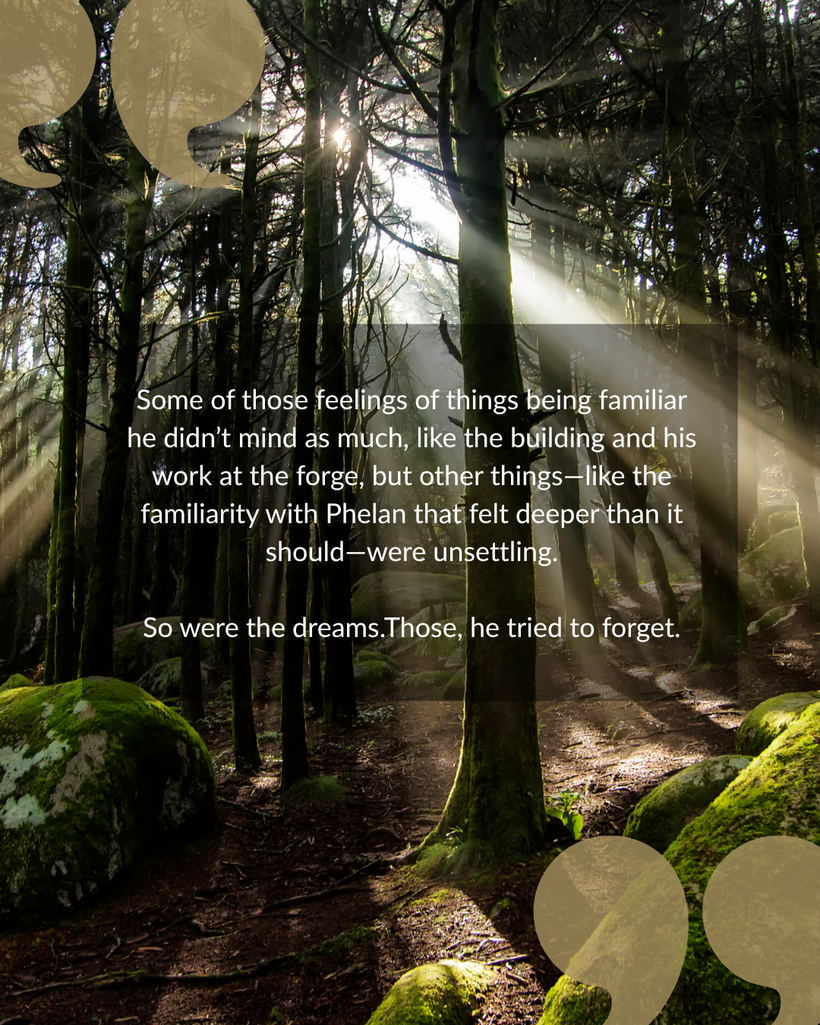
The uncomfortable feeling of having seen a similar sight in some dim and dead yesterday settled into his bones.  The feeling of odd things being familiar had been growing over the past couple of weeks, since the weather had turned sharply colder, as if autumn was giving up the fight against an early winter.  Some of those feelings of things being familiar he didn’t mind as much, like the building and his work at the forge, but other things—like the familiarity with Phelan that felt deeper than it should—were unsettling.

So were the dreams.  Those, he tried to forget.

He watched Phelan straighten from his crouch and felt a prickling at the back of his neck.  Phelan’s gaze scanned the trees and though he couldn’t quite see it from this distance, somehow Matt knew that he was frowning.

He cleared this throat.  “What is it?” he called, glancing from Phelan out into the woods that choked the ravine, scanning trunks and branches once again.

Still nothing.  Whatever was out there, it was either well-hidden or something he just couldn’t see.

I’m not sure which terrifies me more.  That there could be something out there that I can’t see, or that I’ve decided that there’s actually something out there and I’m not just paranoid.

“Not sure,” Phelan called back.  “At least not yet.  You see anything?”

“No.”  But he looked again, brow furrowing.  A gust of wind rustled the branches, sending a few dead leaves that still stubbornly clung to the branches spiraling down toward into the lengthening shadows along the walls of the ravine.  “Do you?”

“Not yet,” Phelan said, carefully stepping over the ward he’d been checking, right up to the true boundary between warded and unwarded ground—at least, that was how Matt had come to understand the thin line in the turf where Kellin and Marin had buried copper wire and salt mixed with ashes.  “Something’s stirring.”

The words were nearly too quiet for Matt to hear, but he heard them nonetheless.  His fingers curled into fists as his jaw tightened before he moved carefully to the edge of the forge’s roof and dropped over the edge, landing in a crouch.  Phelan glanced over, then away again, squinting off into the trees.

“It could be nothing,” Matt said quietly.

“You don’t really think so, though.”  Phelan exhaled slowly.  “And neither do I.”

“Then what?”  Matt crossed the distance between them, trying to swallow his heart back down to its spot behind his ribs from where it had crawled up into his throat.  “Something hunting you?  Or something hunting us?”

A fresh gust of wind tugged at their clothes and hair.  “Not hunting, I don’t think,” Phelan said softly, his voice almost lost under the sound of the rustling branches above, lips barely moving as he stared out into the ravine’s trees.  “It feels more like something’s watching.”

An icy chill slowly worked its way down Matt’s spine.  “You realize that’s almost worse, right?”  He took a deep breath and forced himself to exhale slowly, trying to calm a heart that was already beating too fast.  “The idea of something watching us and not knowing why or what it is?  That’s more than a little unnerving, Phelan.”

A faint sound escaped the red-head, not quite a snort, and he shook his head slightly.  “I suppose not.  But I don’t know what to tell you, Matt.  It just feels like something watching, not something hunting, and I’ve got no answers beyond that.”  He glanced over for a moment, studying him, and something shifted subtly in his expression.  “You feel it, too.”

Matt shook his head.  “I’m feeling paranoid is what I’m feeling.  Probably because shit keeps showing up and trying to kill us.”

The ghost of a smile tugged at Phelan’s lips as he looked away, staring out into the trees again.  His gaze seemed to simultaneously search the ravine and be looking at something very long ago and far away.  “Legends say that those who watch from afar do it from the eyes of an animal—usually some kind of bird, but sometimes other things.  Wolves, deer.  I heard a story about a squirrel, once, but I’m not sure I believed it.”  The ghost of a smile tugged at his lips and Matt felt a growing tightness in his throat, as if some part of him recognized what Phelan was telling him even though he knew he’d never heard it before in his life.  “Sometimes you’re able to not do it that way, but most of the time I’ve never bothered to do it.  Once, though, I almost regretted it.  I was keeping watch over a friend while she did something potentially dangerous and possibly ill-advised because—well.  At this point, I think you can figure out why.”

Phelan crossed his arms, exhaling slowly.  The sun was slipping lower, now, and the stormclouds pressed closer as the daylight started to fade.  “I should have been more careful.  My watching gave her away.”

“How?” Matt asked quietly, staring at him as the wind started to pick up, creeping down the neck of his jacket to chill the drying sweat down his spine.

He smiled faintly, ruefully.  “An owl was following her in daylight.”  He reached over and grasped Matt’s shoulder, squeezing gently.  “If we keep watch for things that shouldn’t be there, we’ll know what’s watching, at least, even if we won’t know who.  Come on.  I don’t know about you, but I can feel that storm in my bones.”  He nodded toward the darkening clouds.

“Do you think it’s snow?” Matt asked as he let Phelan steer him away from the ravine’s edge, back toward the path that wound down the hill from the forge toward the huge tents where they still gathered for meals and a dozen other purposes for their surviving community.  “This time of year, could go either way.”

Phelan paused, tilting his face toward those clouds, his brows knitting for a moment before he looked at Matt sidelong.  There was something ancient and exhausted in his eyes and it made Matt swallow, part of him regretting the question he’d asked.

“Never mind,” Matt said quietly.  “We’ll know soon enough.”

“The wind’s picking up,” Phelan said quietly.  “From the north and west.  Could be snow.”  He exhaled a long breath, scrubbing a hand roughly over his face.  “What’s your gut say?”

A fresh chill worked its way down Matt’s spine.  This moment felt too familiar in a way he didn’t want to wrestle with, not now—maybe not ever.  His gaze drifted up toward the sky, following Phelan’s gaze toward the clouds that continued to build and push in, moving fast on the wind.

“No,” he murmured softly.  “Not snow.  At least not at first.”

The words were bubbling up from somewhere inside and his stomach twisted uncomfortably, pins and needles stinging his fingers and hands from the inside and the hair at the back of his neck prickling uncomfortably.

“Another few days for snow,” Matt murmured softly, then gagged, doubling over and pressing a hand against his mouth, swallowing the bile that surged up in his throat.  Something felt wrong but he couldn’t grasp what it was.  Phelan pressed a hand against his back, between his shoulders.

“Through your nose, deartháir.  Deep breaths.”  Warmth seeped through his jacket from Phelan’s hand and some of the nausea started to recede.  Matt’s breath rasped as he struggled to breathe through his nose and force down the urge to offer everything he’d eaten today up to the grass alongside the path.  His vision blurred and for a few seconds, he thought he tasted blood in his mouth, could feel a hot wind instead of the cold one that funneled through shattered buildings to whip around them.

He squeezed his eyes shut against the sudden sting of tears, then coughed and spat bile into the grass.

“I’m fine,” he rasped, though his stomach nearly made a liar out of him as it lurched again.  Phelan didn’t retreat and Matt could feel traces of the other man’s power seeping through his jacket and shirt and into his skin.

The fact that he could feel it and identify it for what it was left him even more unsettled.

“Don’t,” he whispered.

“Don’t what?” Phelan asked quietly.  “Don’t help?”

“Just don’t,” Matt coughed again, wiping his mouth with the back of his wrist and hand.

For a few seconds, Phelan was quiet.  From the corner of his eye, Matt could see him straighten slightly, his gaze sweeping the area, then flicking up to the sky.

“I won’t,” Phelan murmured.  “But come on.  Pull yourself together so we can get under cover before the rain starts.”

Rain.  A fresh chill worked its way down Matt’s spine even as he heard the distant grumble of thunder.  He forced himself to straighten, swallowing twice and sucking in a pair of breaths before he glanced toward Phelan again.

“Don’t say anything,” he said quietly.

“I won’t.”  Phelan shook his head and sighed.  “It’s up to you, Matt.  All of it.  But you know where to find me if there’s anything you need.  Even if it’s just to talk.”

Scrubbing a hand over his face roughly, Matt nodded.  “Yeah,” he said.  “Yeah, I know.  I just—Phelan, I—”

“I get it.”  Phelan gave him a sad, crooked little smile.  “It’s a lot.  And it’s coming too fast, isn’t it?”

“It’s hard for anything to come when there’s nothing there,” Matt said quietly.

For a second, Matt felt like Phelan might have said something might’ve argued with him.  Instead, he just smiled and slung his arm around Matt’s shoulders.

“Come on,” Phelan said quietly.  “I’ll make you some tea and teach you how to tell the difference between watchers and regular birds.”

They’d gone half a dozen strides before Matt stopped, glancing at him.  “…what happened?”

Phelan’s brow furrowed as he turned fully to face him.  “What do you mean?”

“To the friend you were tracking with the owl.  What happened to her?”

Phelan choked on a quiet laugh and grinned, equal parts rueful and relieved.  “It all worked out.  The ones who spotted it were the ones she was looking for.  She said they were kind and understood.”  His expression tightened for a moment, then turned wistful as he looked away—that same faraway look he’d gotten when they’d been standing out by the ravine.  “She got what she came for and came back safely.  If she hadn’t, I’m fairly certain her intended would have slit my throat himself.”

The smile Phelan turned on him then was sad, full of memory and a thousand things left unspoken.  He just put his arm around Matt’s shoulders again and steered him back toward the tents, toward the fire, shaking his head slightly.

“It was a long time ago,” Phelan said, almost to himself.  “And it all worked out for the best.”

There was too much pain in Phelan’s voice for Matt to fully believe him, but he kept his mouth shut.

There would be another time.  Of that much, he was sure.
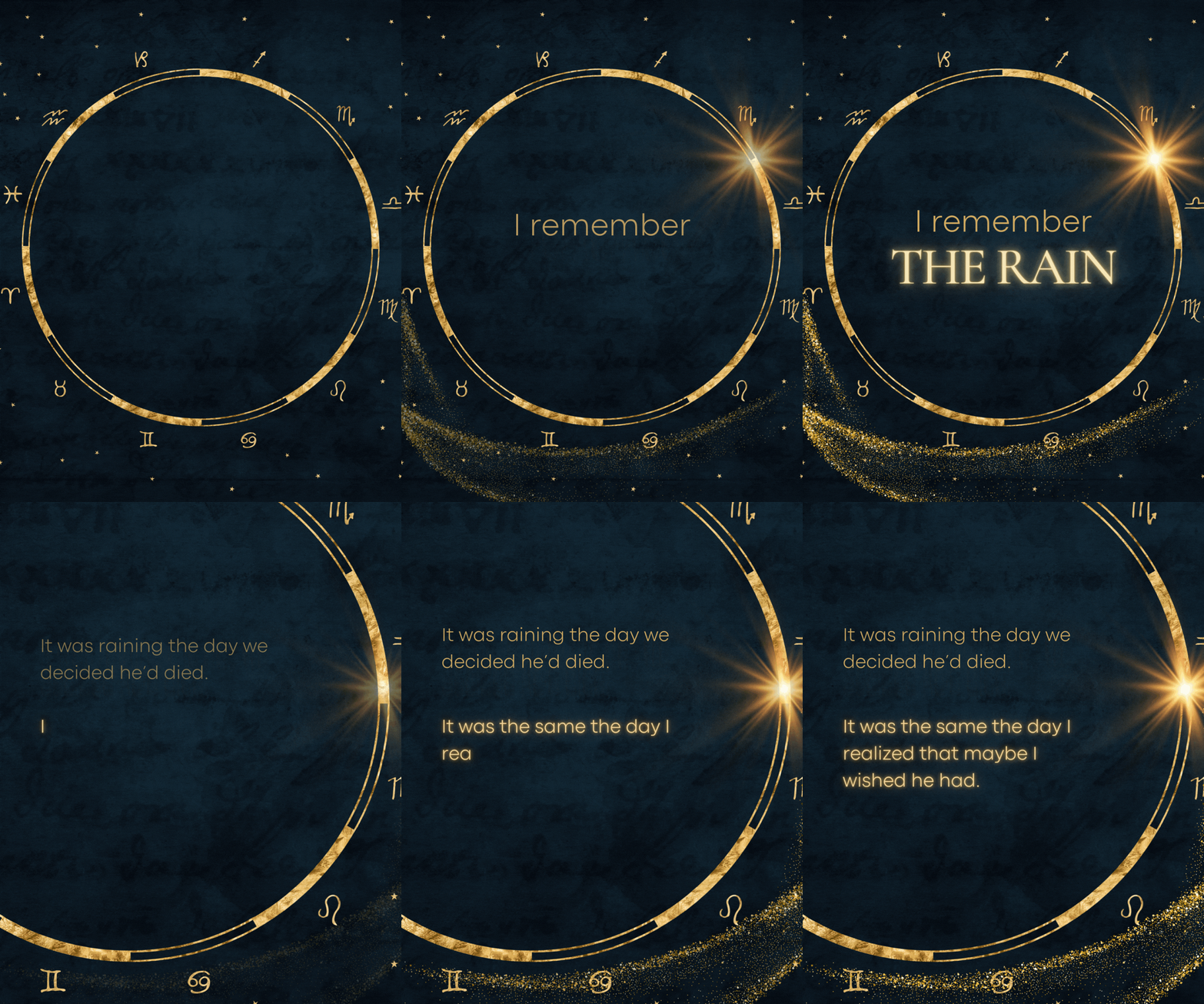
25 Septembers Later

I still remember

Getting up too early

With a late summer cold

On a September Tuesday

Where the sky was so blue

You could see forever.

I still remember

An early morning bike ride

Pledges on a seesaw

Under the blue arch

Who worried when they didn’t see me

Since I’d wiped out on the gravel under the trees.

I remember coming back

Taking a shower

Roommate gone by the time I was done

Sitting down at my computer

Someone telling me in chat to turn on the TV

And so I did.

I remember calling friends

Two calls

Telling them to turn on their TVs too

And being on with one

When the second plane hit.

I still remember

Calling the department office

To ask if we still had class that morning

And my professor asking why we wouldn’t

And being the one to tell him

That two planes had just hit the World Trade Center.

I remember coming back

After five minutes of class

And half an hour at the dining commons

Calling my mom to find out where Dad was

And being relived that I had my directions confused.

I remember sitting on Nick’s floor

And picking teams for the end of the world

And watching all of it come down.

I remember how wrong it all felt

And how we knew everything had changed

And how somehow a whole generation

Had suddenly had their tomorrow be different from what they’d planned.

I remember thinking

That it was the end of one thing

And the beginning of another

And knowing that no matter what happened next

Nothing would ever be right again.

Lost and Found draft work

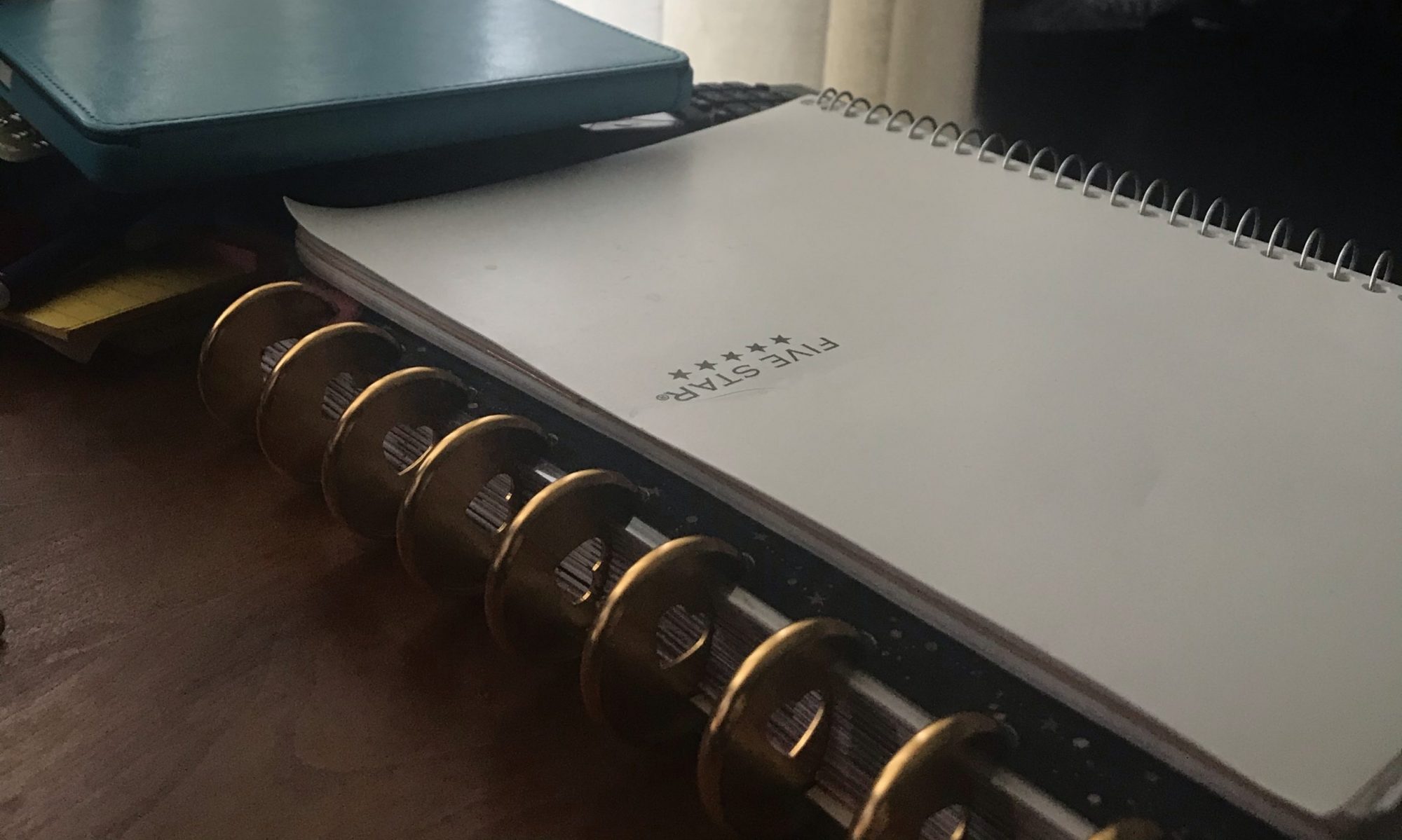
Some handwritten work on the second draft of Lost and Found. That book has definitely shown the benefit of alpha/beta readers, since everyone who did the beta read on the finished first draft told me the same thing: POV needs to be both twins, not just AJ.

They were absolutely right, but it has definitely delayed this book significantly (though certainly for the best, since I continue to learn more and more about additional characters in the series as I work through this and other related projects).

Stuff that happens on a train

I wrote on the train yesterday, as one does. These things happen. I’m sure I’ll have more to say about the whole enterprise later, but tl;dr – I had the building urge to try a new flavor of something, and we’ll see where it goes.

This came from my train writing. Speculate as you see fit.

See my Patreon for a bit more.

Musings on historiography

I am, by training, a historian.  I am also an anthropologist and a political scientist, but by far the most formal training, time, and money spent has been as a historian.

Yes, I know I’m a writer, too, but that is a state of being, not my degree(s).  But it also does certainly tie into being a historian.

Why?

Because historians write—and not just a little.  Historians write a lot.  Part of this is because that’s how our work survives—in monographs and articles and published conference papers, in blog posts and ruminations and our notes.  Writing is and for centuries has been how historians preserve the things that we study and in turn, the writing of other historians is part of how we come to our own understandings of what has been.

Historians write so much that as we progress deeper and deeper into doing history, we all learn about something called historiography.

I just heard a thousand undergrads and probably an equal number of grad students groan.  I get it.  Historiography is hard and can be annoying when all you want to do is be digging through your primary sources and finding that huge new piece of the puzzle that no one else has found before, the answer to the question that no one else has asked.  I get it.  I was there, too.

It has taken a long time for me to really appreciate historiography for what  it is, not just something that we’re forced to do as scholars.  It’s a lens through which we understand our field—it’s our slightly more complicated version of a literature review that would pop up in almost any other field.

Why is it more complicated?  Probably because in doing historiography, we’re not just looking at what other people have talked about before—we’re actually putting together a meta-history of what other scholars have written and argued before.  We are tracing the throughlines of different arguments and interpretations of the past.

Now why would we do that, you might be asking, especially if you’re not necessarily familiar with history as a discipline—or maybe because you are.  We do that because the same way we look at primary source material—whether it be writing, art, records, music, something else—through the lens of the time period it was created in, we also need to look at our secondary sources in the same way.  The influences of time, society, and the situation in which a work was created, scholarly or otherwise, can have a huge impact on how history has been interpreted over time.  Much like other disciplines, you can see different schools of thought—structuralist, post-modernist, the gamut—but it goes deeper than that.

Think about looking at Victorian interpretations of English history—those historians writers had a particular point of view and a particular audience they were writing for, and in turn that influences the work.  A scholar writing in the 1960s may have been radically reinterpreting the work of  a past scholar in a new way, either based on new understandings of the time period or new evidence—or just  by looking at something from another angle.

Historians are constantly in dialogue with history and we are constantly learning new things about the past.  We argue with each other over differing interpretations of evidence in ways that many disciplines don’t—in part, because when we look into the past, we always have to ask ourselves where the line is between what was left behind and what was true.  Every so often, we’ll see a seismic shift in what the discipline sees as the big important questions and who is worthy of study.  It’s part of what makes history so exciting as a discipline—we are constantly learning new things.  It’s also something that can be frustrating about the discipline.

Which brings us back to historiography.

As historians at all levels (whether we know it or not), we work through piles of monographs and articles, slogging through levels upon levels of different interpretations and reassessments.  As you continue to work your way through what’s come before you in the scholarly discourse, you start to see patterns emerge that you can sort into schools of thought or alliances of the same and then reactions to those, reinterpretations of the same evidence, and on and on.  This is why we actually a word for describing that kind of discourse.  In order to be able to do history well, you have to understand how others have done it and how others have understood the same things that you are looking at now.  Of course, there are always gaps.

Usually.

Maybe.

Most historians dream of finding those gaps and writing the seminal work on a particular niche hole in the historiography that may or may not be real.  It’s the dream that dovetails nicely with finding a hidden archive on your favorite subject that no one else knew existed.  Time to fill a big hole.

You know.  Until you find the one unpublished master’s thesis that covered the same material some twenty-odd years earlier.

Do the historiography.  Do the work.  You’ll appreciate it a lot more than you realize later.

I certainly did.

Novembers past and November to come

It was very weird this week to be struck by the sudden realization that I hadn’t spent October thinking through and planning for another round of NaNoWriMo. Up until last year, I had spent almost every October for the last twenty years that way, deciding what I wanted to spend 30 days writing at least 50,000 words on.

My first NaNo was in 2003. My last was in 2023. I had a good run–“winning” more than I lost–and did Camp NaNo over the years here and there, too, in the spring and summer. After a while I didn’t participate in the online community as much, but I did manage to go to a few write-ins in graduate school and then while working through my second bachelor’s degree. It was wonderful and in some ways, I miss those quiet gatherings, the sprints, the coffee and snacks and laughter, the talking through sticky points together and sharing whatever insane yarn we’d come up with for that year.

I think the greatest gift that NaNo ever gave me was the permission to write fast, to write hard, to not worry about whether it was good just that it was down on paper–the permission to be wildly creative without worrying too much. When you have friends writing about sapphic werewolves and alien invasions, you learn those kinds of things.

NaNo was never about writing the great American novel, at least not for me and not for most of the folks I ever interacted with. It was about practicing a craft and telling the stories that were in us, about the actual work of writing and creativity. Even if you didn’t win, you learned something, you got some words toward the million words of practice toward mastery. In a lot of ways, it was magic.

Then the magic died.

It’s weird to think that it’s gone, now, but the writing was on the wall last year with everything that happened. Like for so many things, the stance on AI was the final nail in the coffin. It’s sad, but you also consider that most of the original staff was now gone, and the original magic that was bound up in the whole enterprise was fading.

But that won’t stop a lot of us from settling in this November, as the days grow short and the nights get cold (at least in the northern hemisphere) to work on something new, something old, to write hard and see where our creativity can take us.

I’m no exception. I’ve set myself a challenge and some of what I produce will land here and more will be on my Patreon. There won’t be winning, not this year, not the way there has been before. But there will still be something.

So here’s to the Novembers past and the November yet to come. May it be a creative, magical one.

Thoughts on the promotional landscape

I found myself musing last week about how the advertising landscape—really, the landscape in general—has shifted for creatives over the last 15-20 years or so. For context, started releasing my first serial, Awakenings, in 2011 and probably in that first year and certainly by the second, I was doing some light paid advertising to get it in front of more eyeballs.

That was the heyday of things like serialized fiction (typically on self-hosted sites rather than aggregated spaces like Wattpad or AO3) and tilted more toward original work than fan fiction (not that I didn’t cut my teeth there for a very, very long time). It was also the era of the self-hosted webcomic (I read so many of those in college and grad school). In a lot of ways, the teenage and young adult years of the broadly accessible internet are something I’m sure I’m not the only millennial feels a bit of nostalgia for. Back in those days, there were different kinds of advertising options beyond the ubiquitous shameless self-promotion (which seems increasingly more what we’re expected to do beyond Facebook ads) and I tripped over one called Project Wonderful, which at the time fueled ads on several of the webcomics that I was following.

Now, I haven’t dug too deeply to see if it still exists, but back then, you basically load your advertising budget into a pool, load your different ads (images of different size, static or not) and then could do one of two things: let Project Wonderful pick what would be best for you based on information you put in, including what categories your ad fit into, what kinds of sites you thought your ads would do well on, and how much you wanted to spend per number of impressions, or bid directly on different spots (ie, on sites that you visited yourself). You could also do a combination of both, which is what I usually did.

And I’ll be damned if it didn’t work. At its height, I was getting thousands of hits a day on Awakenings and my other serial after I started advertising them. I wonder now, if I’d decided to advertise my books using Project Wonderful, if I’d have a bigger following now.

It is the only paid advertising I ever did and I can’t say that it didn’t work. This said, I don’t know that it would work the same these days, in our worlds where the algorithms rule our browsing experiences and ad blockers are very much more the norm. Part of what was attractive about Project Wonderful was that you as a site host actually got to pick where you put the advertising boxes, too, which meant you got to figure out how to make it work for your site design. It feels less and less like that these days when you look at so many sites out there that are ad-supported. This said, I don’t know for sure – the last time I hosted any kind of ads, they were from Project Wonderful, and I had some control there.

It’s strange to think sometimes of how much the landscape has changed. Someday I may need to do those Facebook ads (I’m not sold on BookBub) or something similar. It’s going to be a lot of research before that day comes, though, and probably won’t happen until we hit release day for Lost and Found or a similar project.

But we’ll see.