While attending the 2013 Desert Nights, Rising Stars writer’s conference at Arizona State the last weekend in February, I was shocked by how many questions I got asked about writing webfiction. The inevitable question at any break point in the conference was “Are you published?” and when I said I was the self-published, indie-published type and listed what I was working on, people would get increasingly curious when I mentioned the serials I write.
This, of course, led to more questions.
At the end of the day, everything I have learned about both publishing in general and writing webfiction, I have learned by researching these particular topics on the internet. There is a wealth of information available if you know where to look. I didn’t know where to look when I started, but I knew how to start looking.
Introduction
I’ve written before about why webfiction was attractive to me (Doc’s Writercraft: Why Webfiction?), but I haven’t gone into much depth about what you need to write it. By the time you’re done reading this post, hopefully you’ll have a rough idea of the following:
- Essential ingredients for good webfiction
- What skills and tools you need to write webfiction
- Additional resources to help you along the way
I will not be talking very much about monetization of webfiction because I really don’t have very good experience with it. Other webfiction writers, such as MCA Hogarth, have had extremely good luck with it, however, and I would highly suggest checking out the links listed under the resources section to do more research on that particular subject.
Remember, webfiction is a challenging marathon. You don’t have the luxury of going back and changing the rules in mid-stream like you would if you were drafting a novel. Now, some webfiction writers use their serials to live-draft novels. That’s fantastic and can be really, really fun. Keep in mind, however, that in live-drafting your novel for an audience online, you’ll lose some of the flexibility you might otherwise enjoy in the plotting and writing of your first draft.
It is, however, a fantastic way to make sure you write consistently and stay on-schedule.
What you need to get started
The most important thing that you will need to write successful webfiction is a good story that you are interested in telling. Webfiction is in part episodic by nature and ongoing. You will be writing the same story over the course of an extended period of time. You’ll need all the trappings of a good book and more.
What makes a good story? For me, it’s the following (in order of importance for me as a reader and in part for me as a writer):
- Good characters (characters I give a damn about and want to know more about)
- Good pacing
- Understandable/comprehensible/believable problems (and solutions)
- Good setting
Why are good characters listed as the most important thing? Readers are willing to forgive a multitude of sins in most forms of entertainment–books, webfiction, comic, television, films–but if you have crappy characters, most readers are not going to put up with it. You write good characters in your webfiction and people will keep coming back just to find out what happens to them day after day and week after week. A good cast gives you a little bit of leeway when you otherwise wouldn’t have any, especially when it comes to the next item on the list, pacing.
Pacing is very important in webfiction. Unlike in your standard novella or full-length novel, which has rising and falling moments of tension, webfiction has to keep a reader coming back day after day and week after week to see what the new “episode” holds. This means that while you don’t always have to keep ratcheting up the tension, you will need to be careful to make sure that you don’t have very many long, expository stretches in the story where not much happens. People will get bored and abandon you in this scenario. They may wander back later, but you can’t bank on that.
This brings us to problems–these are the challenges that the characters face, the obstacles in their paths toward their ultimate goals. Depending upon the type of story you’re writing, they may be fantastical, beyond the scope of normal life–and that’s fine. But they must be comprehensible to your readers. While the problems may be impossible in our world, the audience must understand and believe that yes, the characters are facing this problem and you, the writer, must keep your reader believing from the moment the characters realize they’ve got a problem to solve until the moment the characters solve it. If you break your reader’s suspension of disbelief, you lose the reader. For a writer of webfiction, this is especially important because the minute you lose that reader, they’re gone–probably never to return. If you’re a webfiction author trying to parlay your webfiction into donations or as promotional material for your traditionally or self-published works, odds are that you’re not going to get anything out of that reader, monetary or otherwise, and if they bother to talk about your serial at all, it probably won’t be in a good way.
Last but not least, setting. In a lot of ways, settings are almost like characters unto themselves, especially in science fiction, post apocalyptic, paranormal, and fantasy webfiction series. These need to be as believable as both your characters and your problems and almost more importantly, your setting must be internally consistent. What do I mean by this? It means that your setting has to have rules, laws–just like Earth has gravity and this force of nature behaves in predictable ways, so too must your setting. In a fantasy setting, for example, your magic should work in internally consistent ways. If your wizard needs to be able to use his hands to cast a spell and his hands are bound, then the spell can’t be cast. If your hungry vampire needs blood to fuel his powers and he’s running on empty, he’s just going to be like every other average Joe on the street until he gets a snack. If you can only make a hyperspace jump at certain points in the system and your heroes are cut off from a jump point, they’ve got to find a way to get there before they can escape to hyperspace. Consistency is key. If you’re constantly breaking your own rules, then you’ll lose readers–unless you’ve got a damned good way to explain the rule-breaking that doesn’t break your story at the same time.
Skills and tools
So you’ve got a great idea, awesome characters, all kinds of neat problems, a fantastic setting, and you’re ready to start writing webfiction now, right?
Wrong.
There are a few more things you’ll need before you can get started. In no particular order, here they are:
- A website (or other platform)
- A backlog to work from
- A way to get the word out about what you’re doing
- The ability to write consistently on demand (so you don’t miss an update)
- A rough idea of how long each update should be
- What you want your posting schedule to look like
Most webfiction writers blog their webfiction through platforms such as Livejournal, WordPress, Drupal, and BlogSpot. I cannot think of any that I am aware of that do it through a static website. Other webfiction writers use communities such as Figment and Wattpad. I have tried both and have found it very difficult to build audiences there, but I’m sure a great many writers (especially those who have come from fan fiction backgrounds) have had success with them. For my own webfiction, I use self-hosted WordPress installations because I find the back-end interface easy to use and the front-end easy to manipulate with downloadable and editable themes. For those who aren’t as code-savvy, WordPress.com hosted blogs or BlogSpot blogs are a good choice. Livejournal is a little less robust and fading from popularity, but it’s still a valid choice. Drupal is a good choice for those who are very code-savvy who prefer something other than WordPress as their blogging platform of choice.
Backlogs for webfiction writers, especially when you’re initially starting out, are incredibly important. You want to have a story started and to know at least initially where it’s going for a few chapters before you start posting anything. This is a failsafe against writer’s block or getting busy. Believe me, writing to a deadline every day of the week can get very difficult, very quickly, especially early on in a project. In addition, by the time you have a few chapters under your belt, you typically have an idea of where the story is going (if it’s a viable story, in fact), who your characters are, and what your setting is like. This guards against early failure and gives you a chance to concentrate early on in your webfiction career at building an initial following–and keeping the words flowing.
Your initial following, if you’re lucky, will eventually leverage itself into a wider audience later, especially if your story is consistently interesting and good. But how do you get that initial audience? Many writers will have different answers to that question, and quite a few will tell you to leverage your friends and family into your audience. That’s fine, but I assume that you want to reach more than your cousin Jamie and your best friends Susie and Jack. Social media, like Facebook and Twitter, can be helpful in building your audience as well, but only if you’re not obnoxious about it. I don’t know about you, but the fastest way to get dropped off of my Twitter feed is to only hock something you’re trying to sell (or draw attention to, etc). For me, the bigger step in developing my audience was twofold: I got my fiction listed on some of the larger webfiction databases (The Webfiction Guide, Muse Success, and Epiguide) and did some advertising on Project Wonderful. These days, I don’t always run advertising campaigns through Project Wonderful, but when I do, I definitely notice a bump in my site traffic. Not all of these hits will be readers to stay, but if I get one devoted reader out of every ten or twenty hits, I’ll count that as worth my investment. For those of you who don’t have the cash to shell out, getting listed on the databases and being active in the communities there will go fairly far toward getting your work noticed if you practice proper internet/forum etiquette.
If you ever run through your backlog of work to post–and this eventually happens to everyone and usually at the worst possible time–you have to be prepared to produce a volume of words at a consistent level of quality in a very, very short amount of time. In essence, you have to write to a deadline. Why not just skip an update or three? Because that will cost you readers and fast. Any time you put your fiction on hiatus, planned or otherwise, you run the risk of someone walking away from your work and never finding it again. After all the hard work you’ve done, this isn’t something you want, is it? So you need to prepare yourself for the eventuality that you may be writing 500-2500 words a day to a deadline for your webfiction, depending on the average length of your posts.
The average length of your post should be generally consistent with some room for outliers. Most webfiction writers tend to hit somewhere between 1000-1500 words per update, but some run shorter or longer depending on their posting schedule. Senna Black, who writes The Frequent Traveller’s Guide to Jovan, posts weekly (or did until recently–she’s up to twice a week now most weeks) and her posts are typically longer than those in my Awakenings series, which posts three times a week. You want to be internally consistent so your readers know about how much fiction they can expect a day or a week–and how much time it’ll typically take to read your updates on the days you post them.
You should also have a consistent schedule for posting so readers will know when to hit your site for an update. Decide this from the outset and stick to it. Keep in mind that it is very, very easy to increase the number of posts you write a week but more difficult to decrease it. Start smaller and get bigger is a good rule of thumb. I initially started Awakenings updating two times a week and later increased it to three. Jim Zoetewey did something similar with Legion of Nothing (though he, if I recall correctly, is one of the few webfiction writers who has increased production and then successfully decreased the number of updates a week without a discernible drop in popularity or readership). Other writers, like Senna Black, post one update a week (and with a recent upgrade to two in the last few months). Some writers have had good experience offering faster updates if they reach a certain cash donation goal, but this works well when you’ve established a large audience that can support this kind of structure. At the end of the day, the trick is to have a schedule–decide what it will be and then stick to it.
Resources
The best resources I’ve found for learning about writing webfiction are ones that I found just by Googling the terminology. Here are the most useful sites I tripped over when I was doing my initial research into the world of webfiction.
Additional links:
That about sums it up for this round. I welcome questions and will answer them to the best of my ability. I hope that this helps anyone who’s thinking about diving into webfiction writing head-first (or even just dipping your toes into the pool).
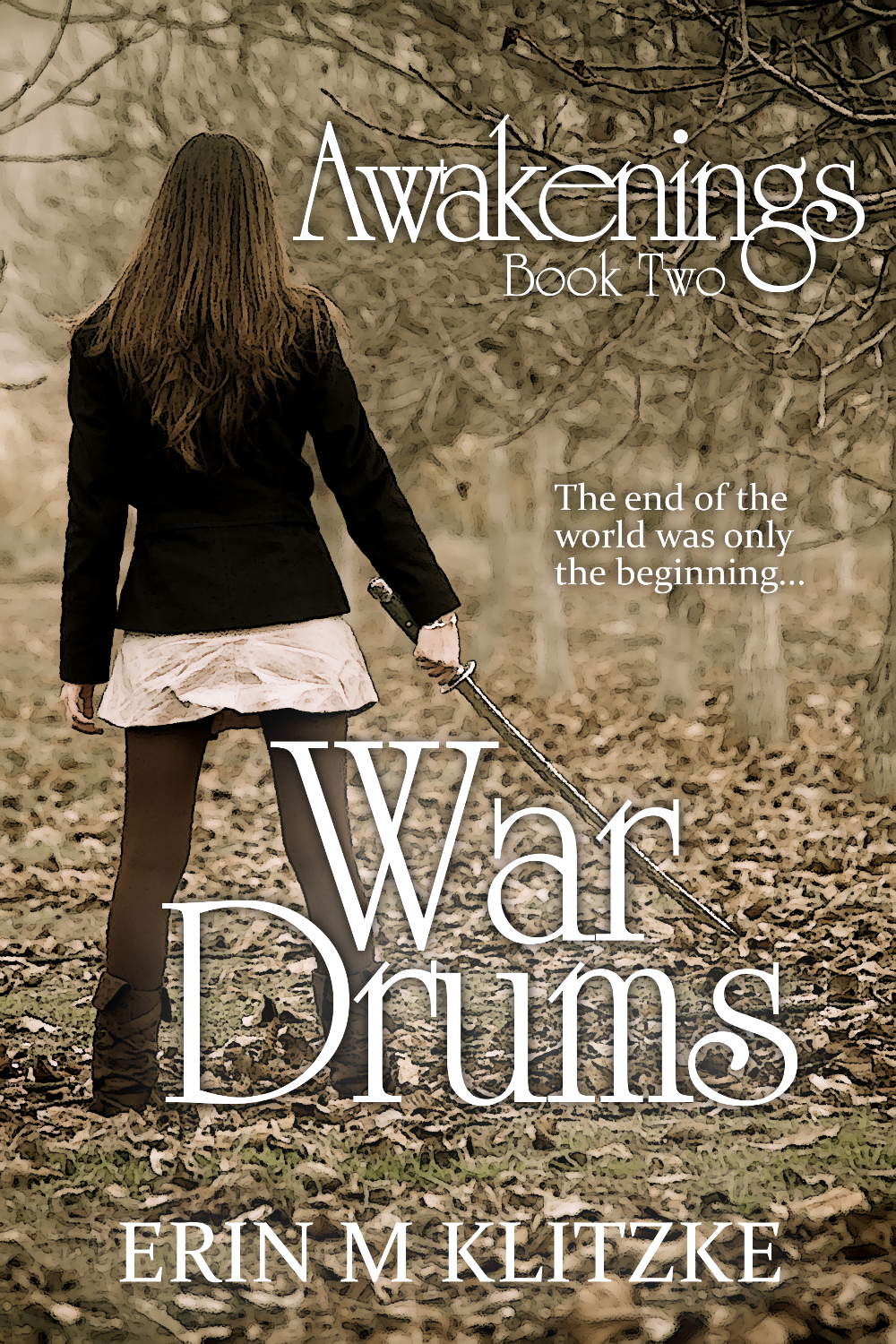
Erin M. Klitzke writes the webfiction serials Awakenings and Legacies of the Lost Earth. You can follow her on Twitter at @EMBKDoc and find her writing wherever ebooks are sold.

 The snippet featured today is a romance project developed with a longtime friend of mine. It will be released under the Jayne E. Alexander pen name.